
Deep drawing stamping die
NEWSKY offers a wide range of services including product design, Deep drawing stamping die, prototyping, machining, manufacturing and stamping production, with the second plant providing injection mold manufacturing and injection molding. We have a team of highly skilled professionals to ensure high quality manufacturing solutions for our customers.

Deep Drawing stamping die
NEWSKY’s custom deep drawing stamping die and stamping services have been used to manufacture countless parts and components in the automotive, medical, aerospace, consumer goods, and alternative energy industries. Our fleet of more than thirty 800-ton presses feature a wide variety of press strokes and are capable of stamping large and very deep drawn parts.
- Material: Steel,Aluminum,Brass,Copper,Stainless steel etc.
- Tooling type: Deep drawing stamping progressive die or Transfer die
- Drawing ratio: 5:1
- Cutting mode: Rotary cutting or Squeezing
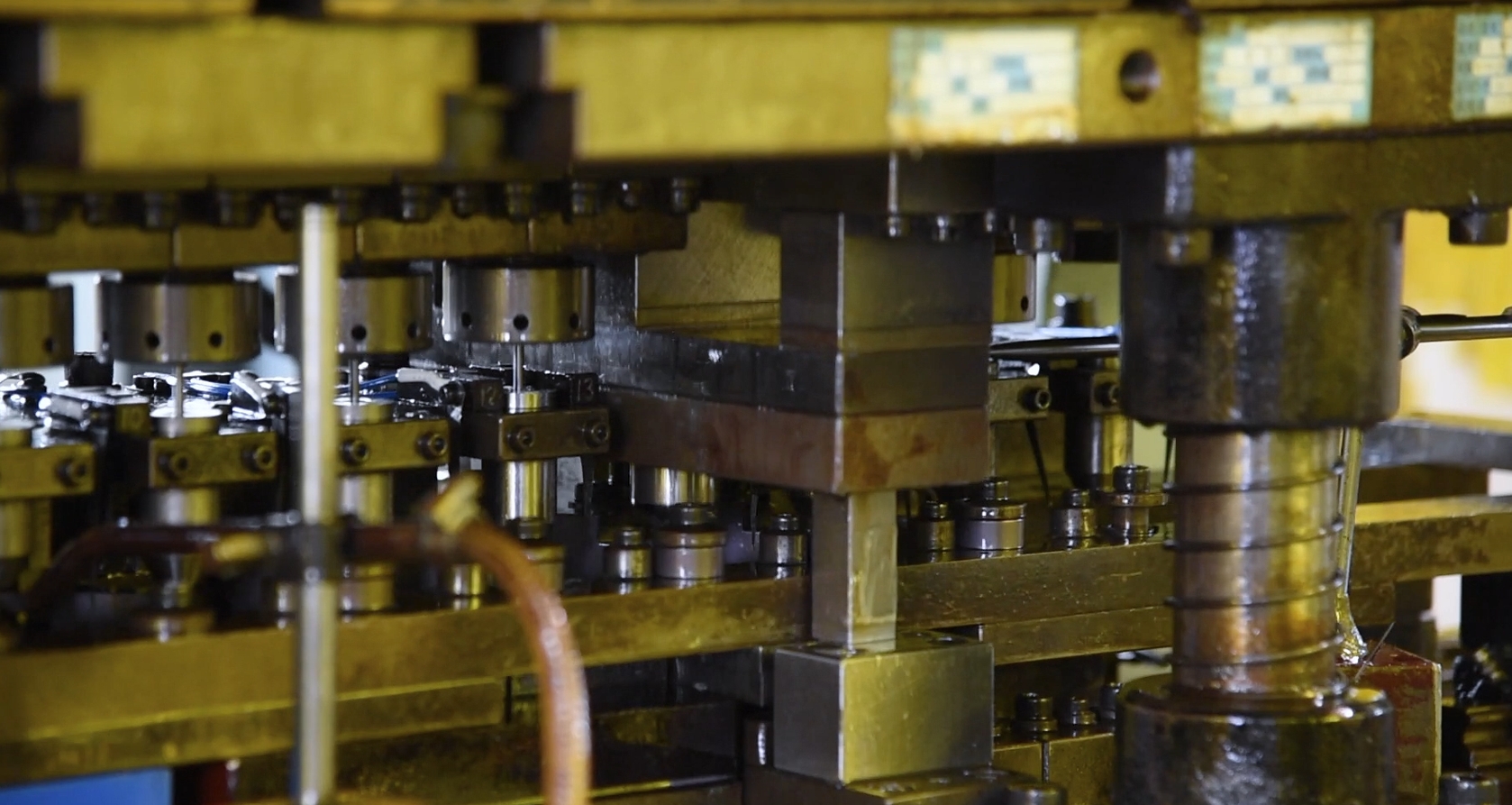
Deep Drawing Transfer Die
We also provide deep drawing transfer molds for our customers. Compared with the deep drawing progressive die, the advantage of the drawing transfer die is to save materials, reduce work steps, and simplify the mold structure, but the continuous drawing of each process is closer, and the height of each process needs to be set, and the activity space of the robot size is fully estimated. Overall, the manipulator transfer method is more cost friendly.
- Material: Steel,Aluminum,Brass,Copper,Stainless steel etc.
- Tooling type: Progressive or Transfer
- Drawing ratio: 10:1
- Cutting mode: Rotary cutting or Squeezing
About Die design
A Deep Drawing stamping die design has several advantages. The process can be performed more accurately and produce parts with a high degree of forming accuracy. The die’s geometry and forming parameters can be optimized to minimize defects at the die entrance corners. Several factors must be considered to design a Deep Drawing stamping die. The following are some of these factors. This article will discuss the advantages and disadvantages of a Deep Drawing stamping die design. Here are some tips to optimize your Deep Drawing stamping die design.
A Deep Drawing stamping die cavity is the most common type of hollow die design. The cavity is smaller than the blank, so the metal flows in from the outer peripheral into the cavity. Deep Drawing stamping die design allows for a variety of different shapes. Typically, the shallower the die cavity, the deeper the blank cavity can be. However, a deeper cavity is more expensive than one with a shallow cavity. A Deep Drawing stamping die can be used to produce hollow shapes, such as cylinders, O-rings, and shaped objects.
During the Deep Draw process, metal flows from the material under the punch into the die cavity, which forces it into the shape of the part. This flow is not entirely smooth, though, and there may be some areas of the part that are not drawn into the die. This is known as flange forming. As the metal is forced into the die cavity, the material in this flange is constantly being forced into the die.
The shape of a blank is also an important consideration when deep drawing. It is important to have the proper clearance value to ensure the metal flows evenly into the cavity. Clearance values are typically in the range of 107% to 115% of the sheet thickness. For this reason, a perfect clearance value is vital for deep drawing. The corner radius of a blank is crucial in controlling the flow of material during the process. If a blank is too large or too small, the metal may tear along the side.
During the first drawing, the flange of a cylinder should be known. Then, the height of the punch entering the cavity should be controlled to avoid binding the material in between the punch and die. A proper drawing ratio between the two factors determines the number of times the parts are drawn. The drawing coefficient of a Deep Drawing stamping die Design is not predictable because it cannot calculate the degree of deformation. The following are some tips for deep drawing die design.

Die drawing speed
Achieving high die drawing speeds requires proper die design. Several factors play an important role in the process, including the entrance radius, the size of the die, the material type and thickness of the blank, and the type of exit cone. In addition to these factors, the design of the die should consider the wire or rod that will enter the die. For example, the diameter of a Deep Drawing stamping die should be less than the diameter of a normal draw die.
The amount of hold-down forces a Deep Drawing stamping die requires is affected by the forming speed. High forming speeds can result in excessive material strain, causing the die to fail or damage the blank. Therefore, slow-drawing speeds produce better quality parts. Drawing at a slower speed also gives the metal ample time to flow into the die. If necessary, lubricant is applied on both sides of the blank prior to drawing. Some lubricants are better suited for deep drawing than others, such as oils, waxes, or emulsions. Die tempering should also be conducted, as this process strengthens the die and prevents it from being damaged during deep drawing.
When deep drawing, proper clearance between the punch and the die is essential. Failure to do so can result in the material being pierced, tearing, or wrinkled. Deep drawing clearance values typically range between 107 and 115% of the sheet thickness. In contrast, the cutting clearance is typically around three to eight percent. Further, proper punch and die clearance is necessary for high quality deep drawing. Deep Drawing stamping dies should be designed and manufactured to match the specifications of the parts being produced.
A deep draw press has the necessary features to produce deep-drawn parts efficiently. A double-action press with die cushion capabilities is a must. The size of a deep draw press should be able to accommodate the entire die set, plus allowances for transfer. The size of the bed is easily calculated by considering the blank and the diameter of the part. The depth of the draw should also be determined by the material thickness. A thick blank may require a small amount of force from the punch while a thin one might require as much as 30% of the total drawing load.
Die flange size
Increasing the diameter of the die flange is essential for deep drawing, since the flanged edge is a critical dimension for assembly. The die flange size of Deep Drawing stamping dies can be adjusted by adjusting the drawing ratio or the radii. A five-mm-large radius will result in too-small flanges, but a 9-mm-large radius will minimize non-axisymmetric material flow.
Increasing the depth of the die cavity causes a greater radial stress on the die flange. This increased stress is a potential wrinkling problem, and the maximum die cavity depth is a good balance between wrinkling and fracture. Moreover, the radii of the die flange and punch edges determine how much blank material flows into the cavity. Too-large radii will cause wrinkling on the cup wall, while too-small radii will cause blank tearing at high stress levels.
Proper clearance between the punch and the blank is also an important factor. Without the correct clearance between the die and the sheet metal blank, the workpiece will be pierced, causing it to warp or wrinkle. The recommended clearance is around 107-115% of the sheet metal thickness. Further, the clearance between the punch and the blank must be regulated to ensure that the workpiece does not crease or tear. Some deep draw setups feature a blank holder, pressure pad, and blank holder.
The DR of the MDR is 2.75 mm. A conventional die has a diameter of 17 mm. A MDR die has a diameter of 37-45 mm. The MDR die can produce a deep drawn part without additional operations. However, its draw radius is smaller at 90-degrees and larger at 45-degrees. Compared to conventional dies, the MDR die produces better LDR.
The smaller diameter of a Deep Drawing stamping die is the most significant consideration when it comes to determining its accuracy. By adjusting the flange size, you will reduce the radii and corner trim scrap. Additionally, the resulting part will be more uniform in thickness after stretching over the final draw punch. So, make sure to choose a Deep Drawing stamping die that fits the blank size. All these factors can affect the quality of your workpieces.